Dr. Ihtesham ul Islam
Dr. Ihtesham ul Islam is an Associate Professor at National University of Sciences and Technology (NUST), Pakistan.
Dr. Ihtesham ul Islam is an Associate Professor at National University of Sciences and Technology (NUST), Pakistan.
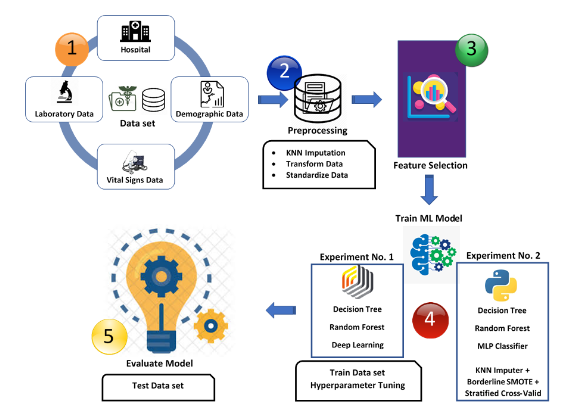
This research proposes the use of machine learning methods to classify dengue severity level for better management of patients and at the same time emergency healthcare services are not disturbed.
Our approach involves a fusion of deformable style transfer (DST), an optimization-centric technique that harmonizes the texture and geometry of a given content image to closely align with a chosen style image. This methodology is coupled with diffusion model inpainting, which is applied to content images originating from Calliar: an online dataset featuring handwritten Arabic calligraphy. Diverging from previous generative art methodologies, our approach presents aesthetically pleasing results, all the while preserving the integrity and structure of the Arabic script.
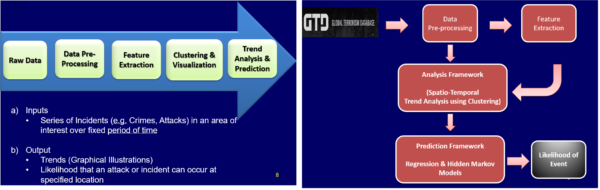
Descriptive and Predictive Analysis of infectious diseases
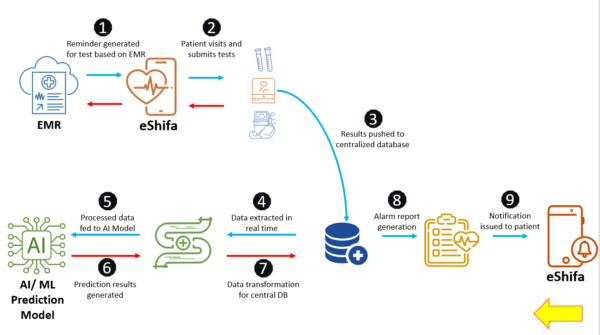
To implement an AI-based GDM screening and outcome prediction platform for a diverse demographic population of South Asia by selecting Pakistan as a base case study.
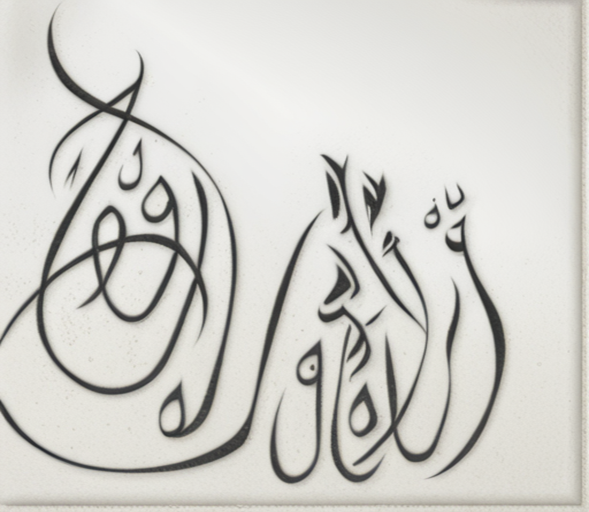
Our approach involves a fusion of deformable style transfer (DST), an optimization-centric technique that harmonizes the texture and geometry of a given content image to closely align with a chosen style image. This methodology is coupled with diffusion model inpainting, which is applied to content images originating from Calliar: an online dataset featuring handwritten Arabic calligraphy. Diverging from previous generative art methodologies, our approach presents aesthetically pleasing results, all the while preserving the integrity and structure of the Arabic script.
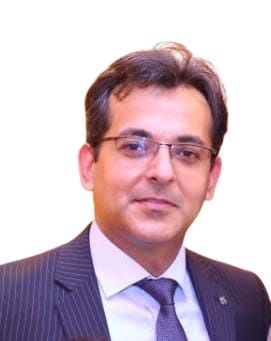
Assistant Professor at NUST Pakistan. His Interests are: Machine Learning, Large Language Models and Enterprise Solutions
Recently social media has been a widely used network that connects people around the world. Not only this but people sharing their life events, thoughts through posts, status updates all gather up as a big data resource. This resource is helpful in conducting various researches, analyses including big data and machine learning. In this study, we analyzed six mental health issues using Reddit’s data. The data obtained summarizes; Depression, Anxiety, Bipolar, Bipolar Disorder, Schizophrenia, Autism and Mental Health which is a general class which discusses mental health. Experimentation is done using various deep learning and NLP techniques applied for classification such as Convolutional Neural Network, Long-short term memory network, Gated Recurrent Unit, Bi- Long-short term memory network and Bi-Gated Recurrent Unit. In addition to these traditional techniques, pre-trained BERT model and …
We develop a CNN-based exposure fusion framework that can detect and eliminate hidden degradations in the darkness, as well as adjust different lightning conditions. The framework helps in extracting optimized feature representations using denoising, enhancement, and fusion module. Moreover, we perform a variety of ablation studies of low-light enhancement methods as well as comparative analysis of our proposed method with existing method is performed both qualitatively and quantitatively.
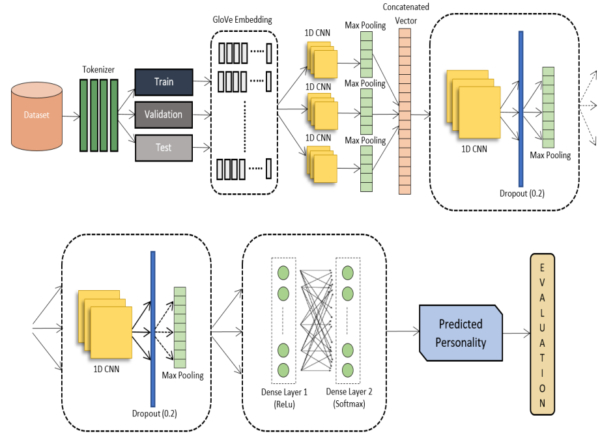
This research proposes a machine learning model and a deep learning model to predict the personality of an individual based on Myers–Briggs Type Indicator (MBTI) personality model. The proposed machine learning models (SVM, LR, MLP and XGBoost) were trained on MBTI and MBTI500 datasets with imbalanced and balanced instances (using SMOTE). The proposed deep learning model was trained using CNN with GloVe word embeddings. SVM model achieved the highest accuracy of 96.81% for machine learning model on MBTI500 dataset with SMOTE. However, CNN exhibited the highest accuracy of 99.54% on MBTI dataset which supersedes the existing models